
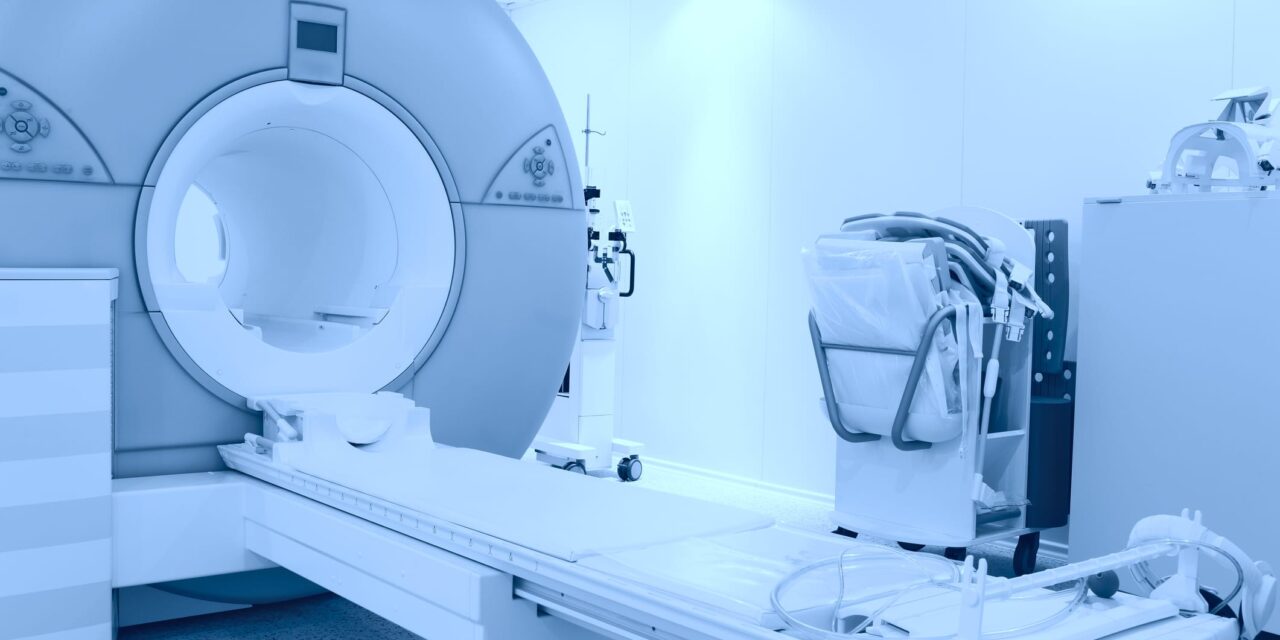
The new agent is indicated for visualizing lesions in the central nervous system and other body regions for adult and pediatric patients.
Bayer has received US Food and Drug Administration approval for Ambelvist (gadoquatrane), a new contrast agent for magnetic resonance imaging (MRI). The agent is indicated for use in adult and pediatric patients, including term neonates, to detect and visualize lesions with abnormal vascularity in the central nervous system and other body regions.
Ambelvist is a macrocyclic gadolinium-based contrast agent with a novel tetrameric structure. According to a company press release, it is the lowest-dose macrocyclic gadolinium-based agent approved in the US. The recommended dose is 0.01 mmol/kg of body weight, which delivers 60% less gadolinium than agents dosed at 0.1 mmol/kg and 20% less than gadopiclenol.
“I often rely on contrast-enhanced MRI exams to inform clinical decision making. With this approval, we now have an additional option that can help deliver contrast-enhanced images at the lowest macrocyclic GBCA [gadolinium-based contrast agent] dose, reducing gadolinium exposure while preserving the clinical information we often need,” says Christopher Hancock, MD, director of neuroradiology at HALO Diagnostics Desert Cities and a clinical study investigator, in a release.
The approval is supported by data from the Phase III QUANTI clinical studies. These trials evaluated the agent in adult and pediatric populations undergoing contrast-enhanced MRI. Findings demonstrated increased lesion visualization when comparing combined pre-contrast and post-contrast images to pre-contrast images alone. Visualization scores for the 0.01 mmol/kg dose were similar to other tested macrocyclic agents with higher gadolinium content in descriptive analyses.
“At Bayer, our focus has always been on enhancing patient care, and we are proud to introduce Ambelvist as our next-generation option for contrast-enhanced MRI,” says Jill Carbone, vice president and head of radiology, North America product and pipeline at Bayer, in a release. Carbone adds that the agent supports healthcare providers in following clinical guidance to use the lowest gadolinium dose necessary for adequate imaging.
The agent carries a Boxed Warning regarding the risks of intrathecal administration, which can cause serious reactions including death, and nephrogenic systemic fibrosis. The latter is a risk for patients with impaired drug elimination and can result in fatal or debilitating fibrosis affecting the skin, muscle, and internal organs.
Additional warnings and precautions include potential hypersensitivity reactions, gadolinium retention in the brain and other organs, acute kidney injury, and the potential for the agent to obscure certain lesions visible on non-contrast MRI. The most common adverse reactions reported in clinical trials included dizziness, headache, injection site reactions, nausea, vomiting, feeling hot, paresthesia, and pruritus.
ID 29602723 © Sudok1 | Dreamstime.com